Practical note · About 5 minutes
A first year is a conversation
A new garden is not finished at planting. The first growing season is when it starts telling you what it actually needs.
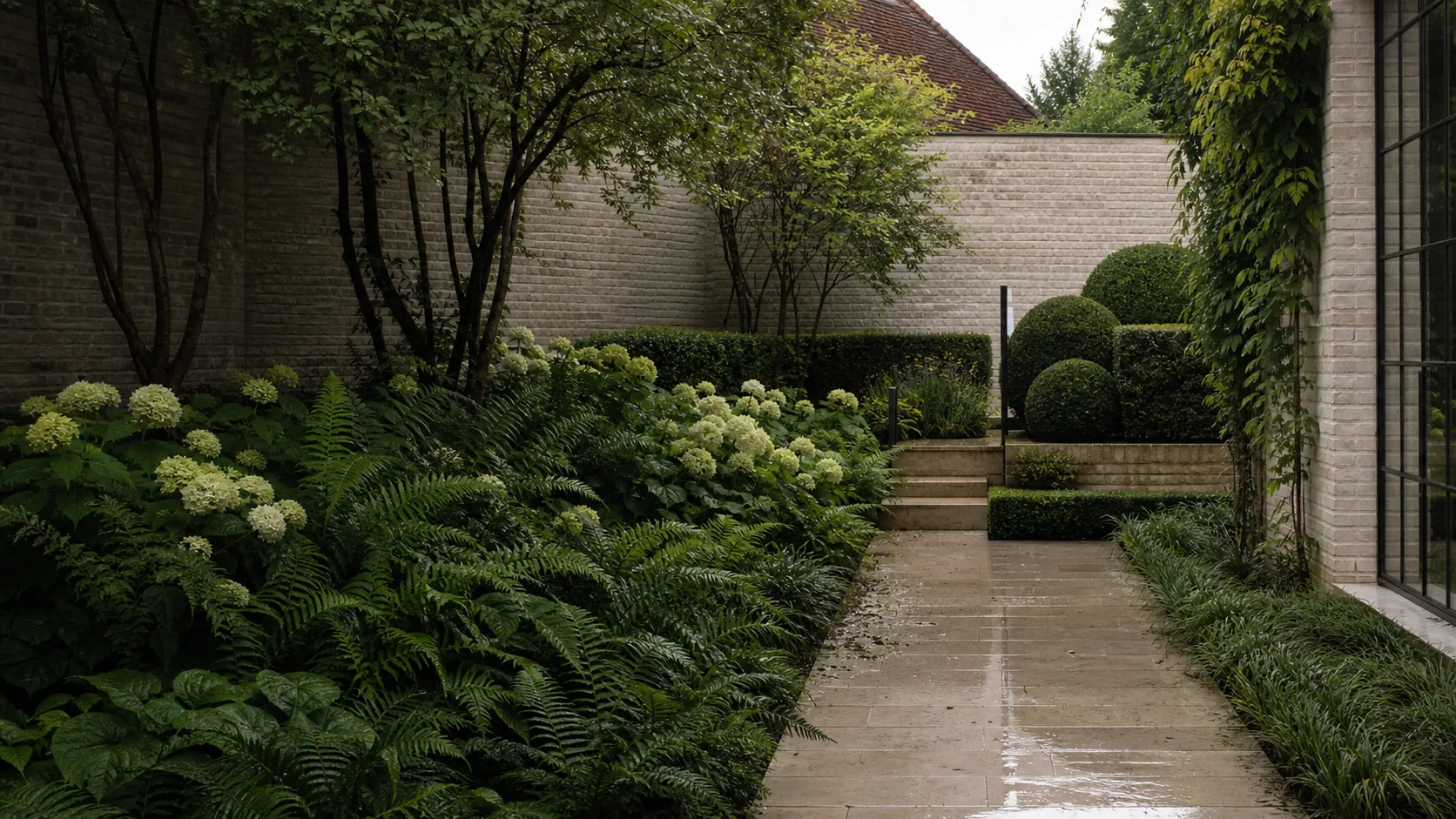
Everything moves in year one
A planting plan is an informed prediction. Some of it will be right and some of it will not, and there is no way to know which is which until the garden has been through a summer and a winter.
A shrub that was supposed to screen the neighbour turns out to be in shade for half the day. A path that looked generous on paper is the one place water collects. A plant chosen for its flowers turns out to be the one the household walks past every morning and never sees. None of that is a mistake. It is information you can only get by living with the garden.
Watering is the whole job in the first summer
More new planting is lost to under-watering in year one than to anything else, and it is almost always the same pattern: frequent light watering that wets the top few centimetres and encourages roots to stay shallow.
What works is the opposite. A long, slow soak once or twice a week in dry spells, delivered at the base rather than over the leaves, so the water reaches thirty centimetres down and the roots follow it. Twenty minutes with a hose on a slow trickle per shrub does more than an hour of sprinkling.
Trees and hedges need this for two full seasons, not one. That is the part people are usually surprised by.
What the first autumn shows you
When the first frost knocks the soft growth back, the structure of the garden becomes visible. This is the honest moment: you can see which plants are holding a view, where the ground is still bare and where the plan is thinner than it looked in June.
It is also the right time to move things. A perennial lifted and replanted in October will barely notice; the same move in May sets it back a year.
What we actually do on a first-year visit
We check the watering, because that is usually the thing that needs correcting. We look at stakes and ties on new trees, which are often either forgotten or left too tight. We top up mulch, since the first year’s layer has usually broken down.
Then we walk the garden with you and write down what is not working. Sometimes that is a plant swap. Often it is simpler: a path that needs widening by twenty centimetres, or a shrub moved two metres to the left.
The point of the first year
A garden that gets attention in its first year needs much less in its third. The planting knits together, the gaps close, and the weeding drops away because there is no bare ground left for anything to colonise.
That is the whole argument for care visits. Not tidiness for its own sake, but protecting the money already spent and getting the garden to the point where it looks after itself.
More practical notes
What brick remembers
Old brick stores heat, drains differently from new paving and makes a sheltered pocket on a cold day. In Grimbergen that is worth more than most people realise.
Read the note →The useful shade
A mature tree is not empty space. It is a different set of opportunities, and usually the best thing in the garden.
Read the note →