Practical note · About 4 minutes
What brick remembers
Old brick stores heat, drains differently from new paving and makes a sheltered pocket on a cold day. In Grimbergen that is worth more than most people realise.
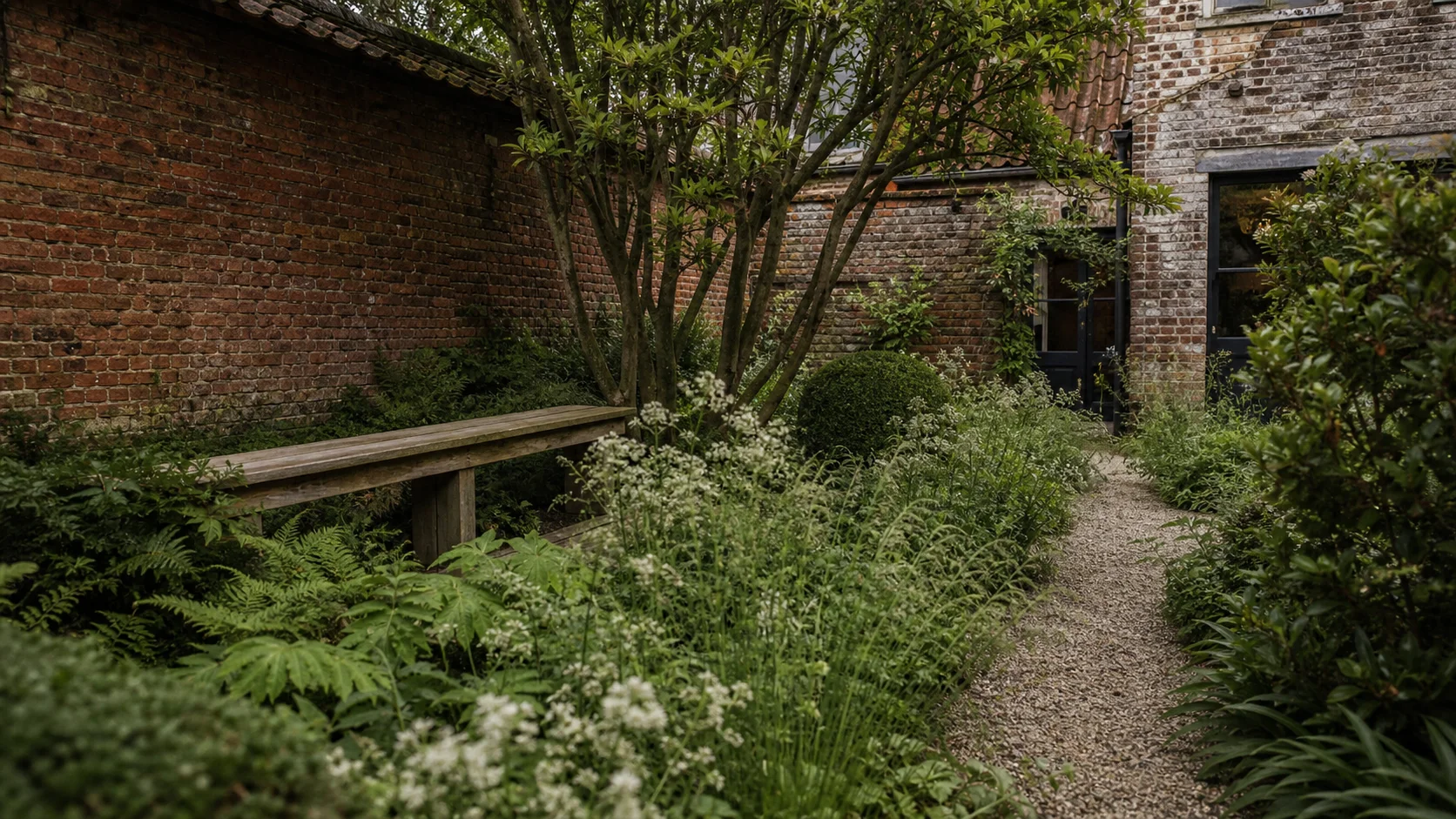
An old wall is a climate, not a backdrop
A south or west-facing brick wall absorbs heat all afternoon and gives it back slowly after dark. The strip of ground within about a metre of it can run two or three degrees warmer than the middle of the same garden, and it stays drier because the wall throws rain outwards and the footings pull moisture away.
A north-facing wall does the opposite. It stays cool, holds damp at the base and sees direct sun only in high summer. These are two completely different growing conditions in one small garden, and the difference is often what decides whether a border thrives or sulks.
What we look for before planting anything
We stand in the garden at two different times of day and note where the sun actually lands, not where people assume it lands. A wall that looks sunny at eleven can be in full shade by three.
Then we look at the base of the wall. Moss and algae on the lower courses mean water is sitting there. Loose mortar and white salt bloom mean moisture is moving through the brick itself. Both change what will survive and both are worth knowing before you spend money on plants.
Finally we dig a test hole. Old walls usually have wide footings just below the surface, and roots from whatever grew there before. If the first spade hits concrete at twenty centimetres, the planting plan has to change rather than the wall.
Planting the warm side
Warm, dry, sheltered ground suits plants that would struggle in the open in a Belgian winter. Figs ripen against a warm wall here where they would not in the middle of the lawn. Rosemary and lavender last longer because their roots are not sitting wet through February.
The catch is water. That strip is in the wall’s rain shadow, so it needs deeper planting holes, generous compost and a proper soak in the first two summers rather than a light sprinkle.
Planting the cool, damp side
The shaded base of an old wall is one of the easiest places to get right, because the plants that like it are tough and cheap. Hart’s tongue and male fern, hardy geraniums, epimedium, hellebores and Solomon’s seal will fill it within two seasons.
What we avoid is climbers that grip. Ivy and Virginia creeper will hold damp against soft old mortar and their roots find every open joint. On a wall worth keeping we use wires and a clematis, a climbing hydrangea on the shadiest face, or a trained fruit tree, so the wall can be repointed later without pulling the garden apart.
If the wall needs work, do it first
Repointing is messy, and lime mortar dust is not kind to new planting. If a wall needs attention in the next few years, it is far cheaper to do that before the border goes in than to plant twice.
We would rather tell you to wait a season and get the wall sorted than sell you a planting plan that has to be lifted out again.
More practical notes
The useful shade
A mature tree is not empty space. It is a different set of opportunities, and usually the best thing in the garden.
Read the note →A first year is a conversation
A new garden is not finished at planting. The first growing season is when it starts telling you what it actually needs.
Read the note →