Practical note · About 4 minutes
The useful shade
A mature tree is not empty space. It is a different set of opportunities, and usually the best thing in the garden.
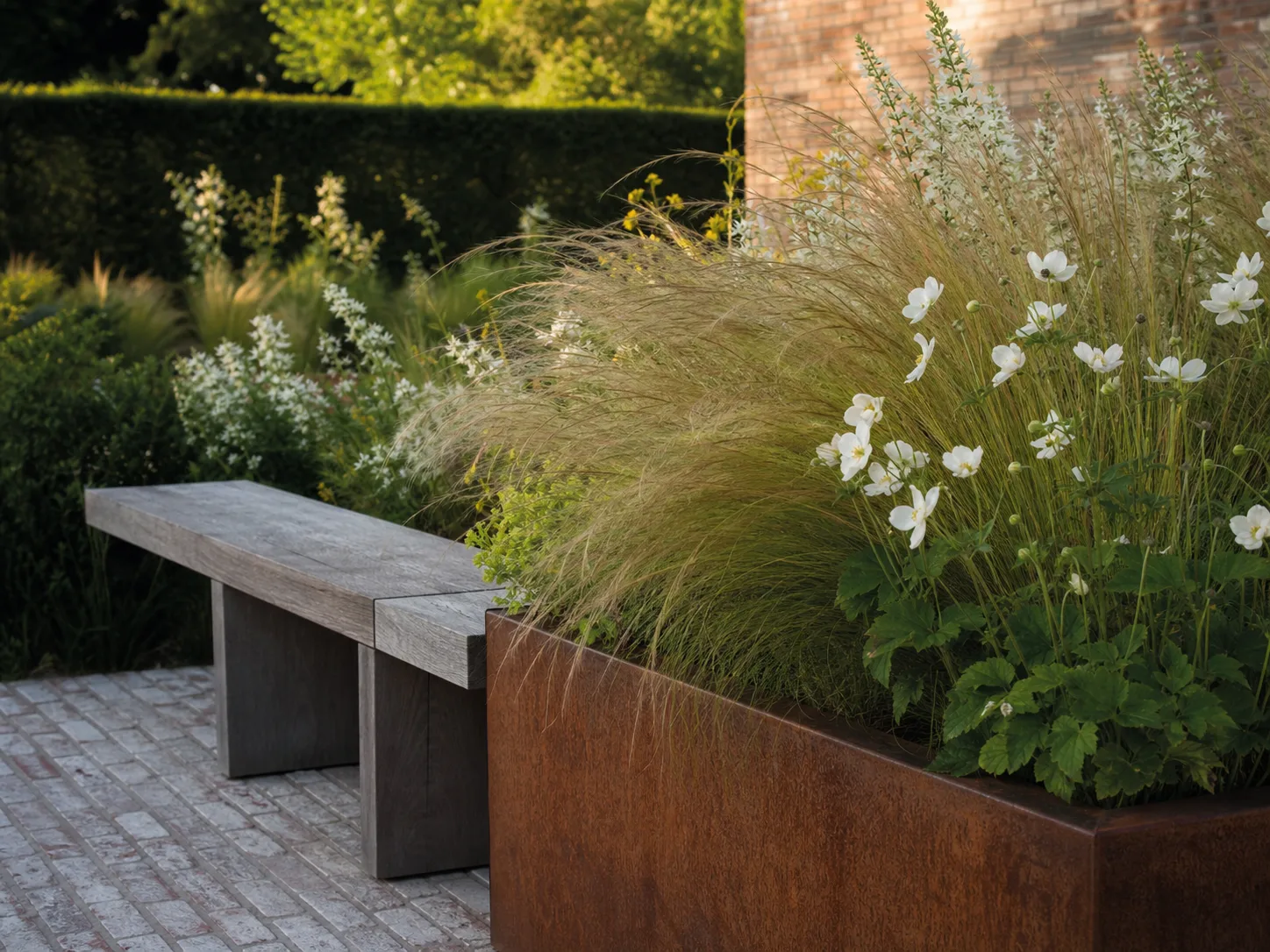
Grass under a tree is a losing argument
Almost every shaded garden we visit has a worn, mossy patch of lawn under a tree, reseeded every spring and thin again by July. It is not a maintenance failure. Grass needs light and open soil, and a mature canopy takes both.
The moment you stop trying to grow lawn there, the space becomes easy. Groundcover, gravel, a paved sitting area or a planted bed all work under a tree. Grass is the one thing that does not.
Three kinds of shade, three different plans
Dappled shade under a high canopy such as birch or a pruned fruit tree is generous. Most woodland-edge planting is happy here, and bulbs will flower before the leaves come.
Dry shade under a dense evergreen or close to a large conifer is the hardest. The soil is full of fine roots that take every drop. This is where we use tough survivors: epimedium, Euphorbia amygdaloides, bergenia, dryopteris, and a deep mulch every autumn.
Damp shade on the north side of a building is the most rewarding. Hostas, ferns, astrantia, brunnera and Solomon’s seal will make it look established within two years.
Plant small, and plant in autumn
Under an established tree, a small plant beats a large one. A nine-centimetre pot can find a gap between roots; a big root ball needs a hole you cannot dig without damaging the tree.
Autumn planting matters more here than anywhere else, because the ground is still warm, rain is doing the watering, and the new roots get months to establish before the canopy closes over and the competition starts again.
Do not raise the soil level
The most common well-meant mistake we are called in to fix is a new raised bed built over a tree’s root plate. Even fifteen centimetres of extra soil against the trunk restricts air to the roots, and the damage shows up two or three summers later when the crown starts thinning.
If you want more depth, we take it outwards rather than upwards, or we use containers standing on the surface instead.
Make the shade somewhere to sit
The practical point of all this is that shade is where you actually want to be in August. A bench, a table that fits four, a firm path that stays usable in wet weather, and planting that stays green all season will earn more use than the sunniest border in the garden.
More practical notes
What brick remembers
Old brick stores heat, drains differently from new paving and makes a sheltered pocket on a cold day. In Grimbergen that is worth more than most people realise.
Read the note →A first year is a conversation
A new garden is not finished at planting. The first growing season is when it starts telling you what it actually needs.
Read the note →